How Long Is a Coiled Snake?
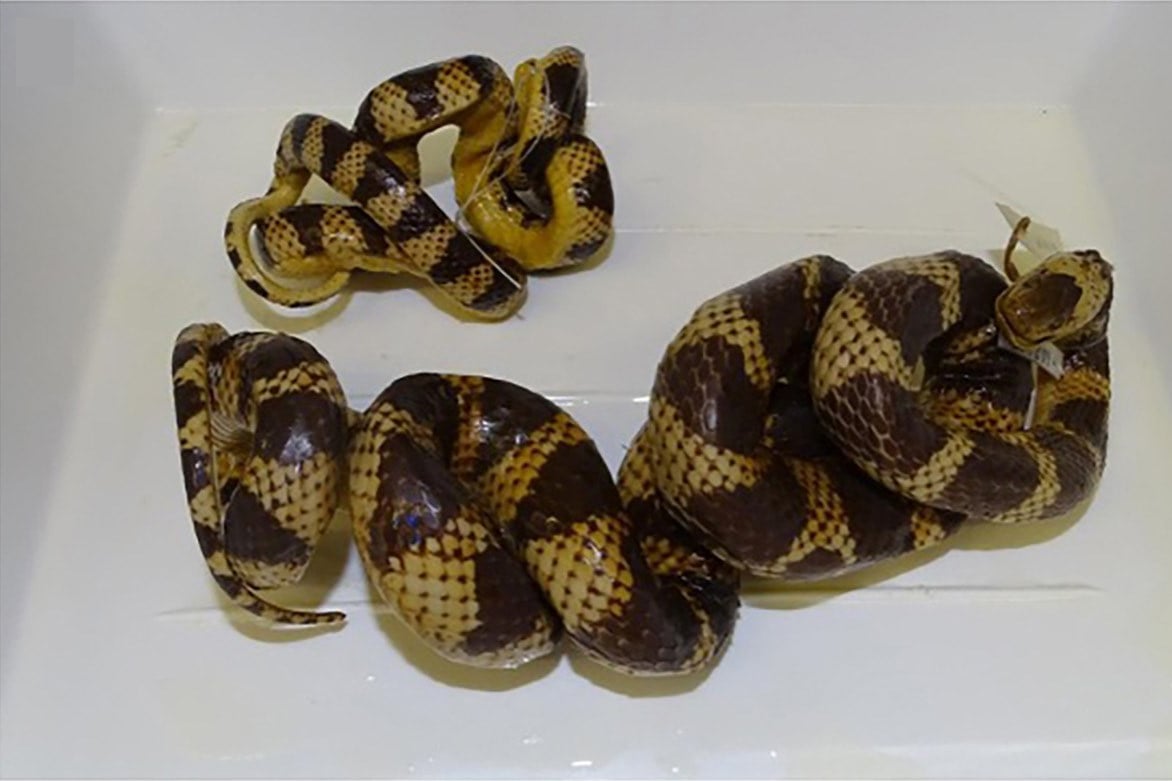
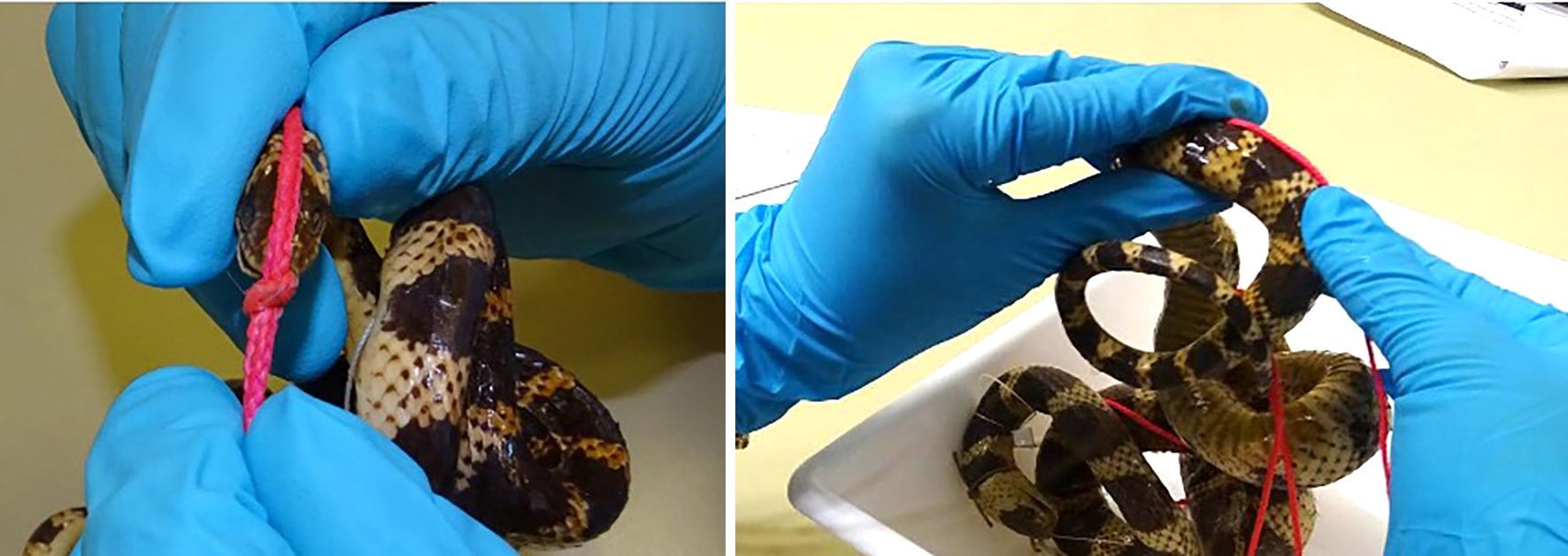
Photo: Isabel Kaiser, from Kaiser et al. 2026, Herpetology Notes
Take a piece of string. Lay one end on the tip of a snake's snout and follow the body, coil by coil, pressing the string down as you go, until you reach the vent (the opening under the base of the tail). Pinch the string there, straighten it along a tape measure and read off the number. Now do it again on the same snake, but follow the belly instead of the back.
On the two museum snakes we tested, the second answer came out about a fifth shorter than the first. Put the other way round, the back was a quarter longer than the belly. Same snakes, same strings, same people. The only thing that changed was which side of the animal we measured.
A problem hiding in plain sight
Length is the most basic fact about a snake. Herpetologists have recorded it since the early 1800s, usually as snout–vent length, the distance from the tip of the snout to the vent, which leaves out the tail. It tells us how big a species gets, how large an animal is when it starts to breed, and how males and females differ.
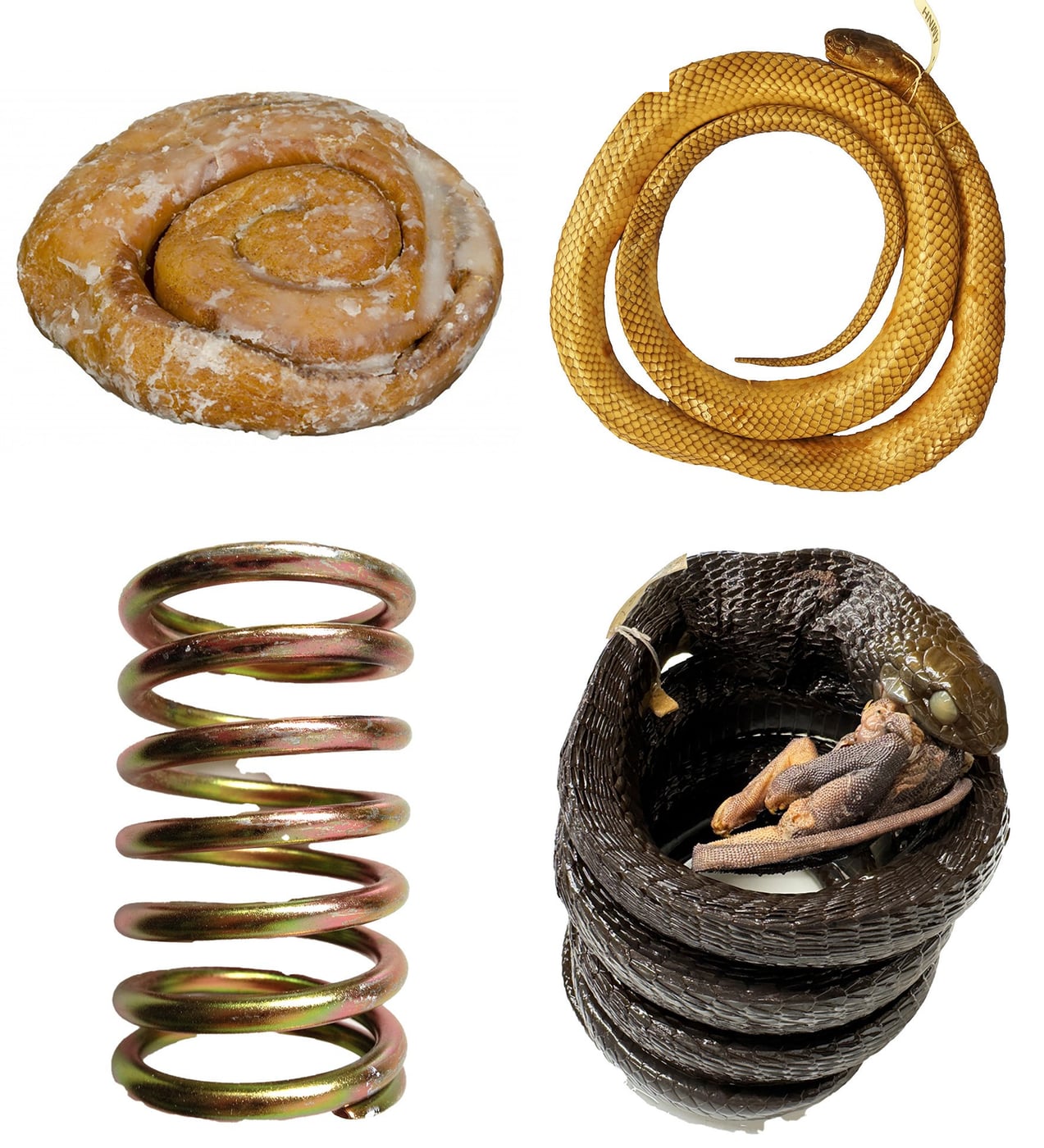
Measuring a living snake is hard enough, because snakes stretch and squirm. A preserved snake is a different kind of hard. In a museum, many snakes are stored as stiff coils so that they fit into jars. A snake coiled flat, like a cinnamon roll, can sometimes be eased into a line. A snake coiled in three dimensions, like a metal spring, cannot be straightened at all, because the preservative has set its body in place.
For snakes that lie flat, there are ways to measure from photographs, including one we published in 2018. For a snake set like a spring, people use string, tubing or wire. The trouble is that nobody had agreed on how. Papers rarely say what the string was made of, and they almost never say whether it was run along the back or the belly. Hinrich and I had measured more than 1,500 snakes between us, and we were not satisfied with the state of the science. The study that finally put numbers on the problem was led by Isabel Kaiser, as part of her International Baccalaureate at the Bonn International School.
Five measurers, four implements
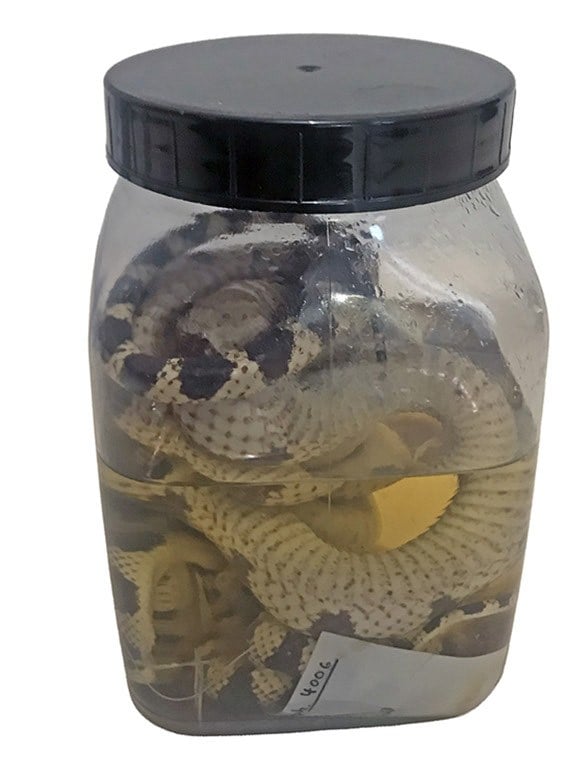
The test took place in a laboratory at the Museum Koenig in Bonn, all on the same table. The subjects were two preserved Amazon False Coralsnakes (Oxyrhopus rhombifer) from Amapá State in Brazil, one larger and one smaller, which had been stored together in one jar. Both were set in irregular, tangled coils, the hardest shape of all to measure.
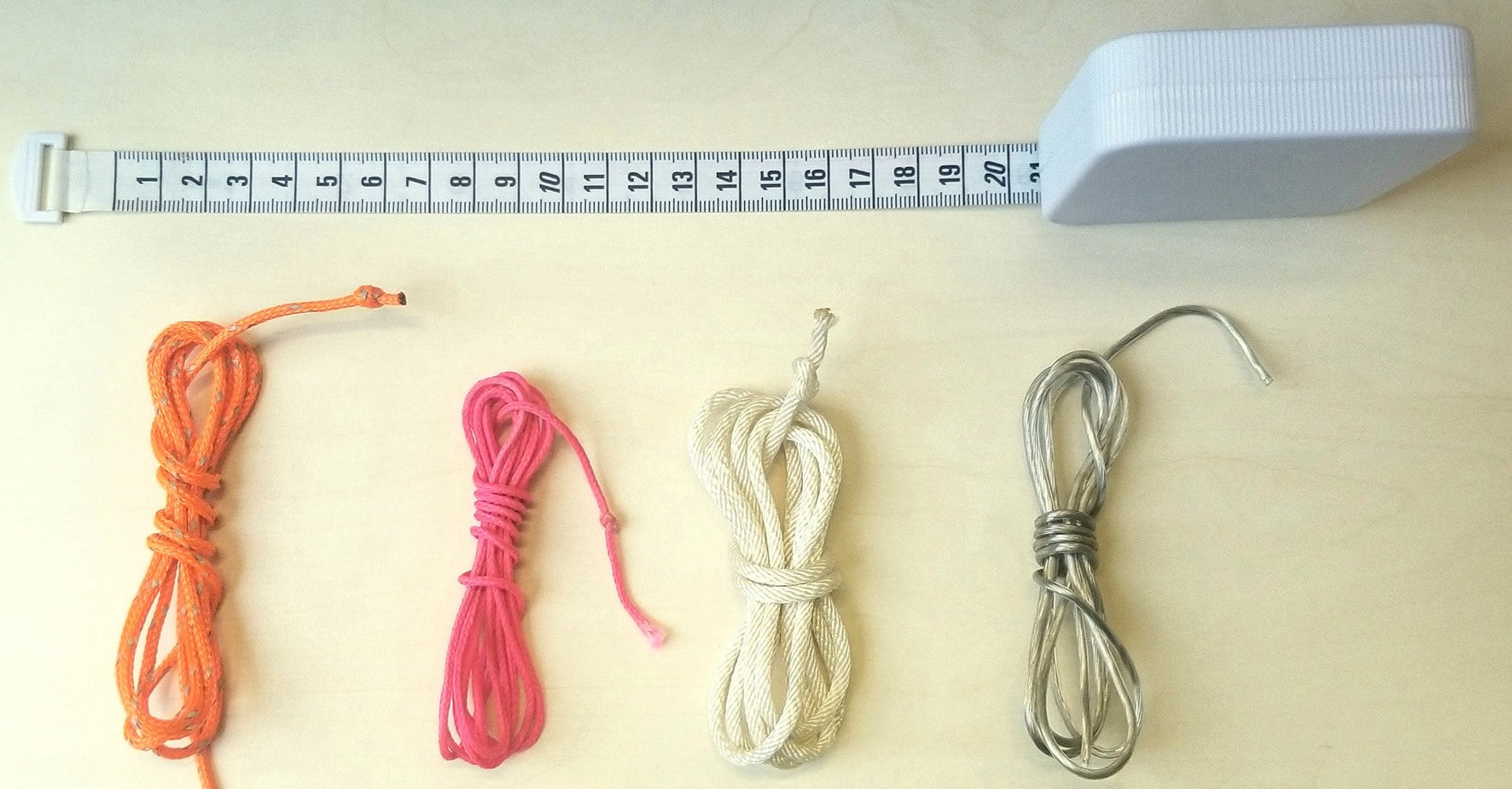
Four implements were tested: a white, an orange and a pink braided polyester string, and a piece of flexible loudspeaker wire. The white and pink strings were the kinds that Hinrich and I had used before. The orange string and the wire came from a local hardware store.
Five people did the measuring. One had no experience with snake anatomy, two had limited training, and two were professional snake researchers: Hinrich and me. We agreed on a common technique and demonstrated it to the others. Line the knot up with the snout. Press the string against the middle of the body, along either the back or the belly, working towards the tail without letting it slide. Stop at the rear edge of the plate that covers the vent, pinch, and read the length to the nearest millimetre on a tape measure taped to the table edge.
Each person measured each snake three times along the back and three times along the belly, with each of the four implements. That made 48 measurements per person, which took two to three hours, and 240 in all. Since the true length of a coiled snake cannot be known, we used the average of all measurements as the benchmark and called it the "Objective Length".
Myth 1: back or belly, it's all the same
This was the big surprise. In every case, the length along the back was longer than the length along the belly. For the larger snake the averages were 983 mm along the back and 787 mm along the belly, a difference of almost 20 centimetres. For the smaller snake they were 573 mm and 458 mm.
The reason lies in the spine. Coiling bends it, and each twist opens up the spaces between the vertebrae along the back while the belly side contracts. So every twist adds a little length to the back and takes a little from the belly. In a snake preserved less twisted, the two lengths may be closer.
This matters for old data. In 2012, two researchers remeasured museum snakes along the belly and found that their results were on average 22% below the lengths recorded earlier for the same specimens. That figure falls neatly into our 20–25% range, which suggests that the earlier measurements were probably taken along the back. Nobody had said so, perhaps because everyone assumed it made no difference.
Myth 2: any old string will do
The strings did not agree with each other either. The pink string, the stretchiest, always gave lengths that were too long, by 1.8% on average. The wire, the stiffest, gave the shortest lengths, 2.2% too short, and it was hard to keep against the slippery skin. The white string was 1.0% too long. The orange string from the hardware store did best, only 0.2% short of the benchmark.
Myth 3: experts measure best
Now for the humbling part. The two measurers with doctorates and years of experience were Hinrich and me. We had the largest errors in the group: one of us was 2.2% too long on average and the other 1.9% too short. The most accurate measurer, one without professional experience, came within 0.1% of the benchmark.
Experience did help in another way. One of the two experienced measurers was the most consistent, repeating nearly the same length each time. The least consistent was one of the less experienced participants. Accuracy and consistency, it turns out, are not the same skill.
The spread between people was worst on the smaller snake. Along its back, the longest single measurement was 683 mm and the shortest 532 mm, a difference of about a quarter. On a small snake, a few millimetres of slack add up to a large share of its length.
"At least at this point we can say that we now know what we don't know." — Kaiser et al. 2026
What it means
Why fuss over a few centimetres? Because lengths are used to decide things. If the size at which a species starts breeding is underestimated, an endangered snake may be assumed to breed earlier in life than it really does, and it may be given weaker protection as a result.
Our study was small, and we say so in the paper. We used two snakes of one species, five people and four implements, and recruiting volunteers was hard during the COVID restrictions. But the conclusion is clear. The true length of a coiled, preserved snake cannot be known exactly. Its errors, however, can be measured and kept small. At the very least, every paper should state whether a snake was measured along the back or the belly, and with what.
We also suggested a larger version of the experiment, with at least ten snakes and at least ten measurers, repeated on different days. It could be done in any biology class, which seems fitting for a study that began as a school project.
The papers
- (2018) A portable, low-cost approach for photographing fluid-preserved snake specimens: recommendations with comments on optimizing specimen photography in natural history collections Herpetological Review 49(4): 666–677
- (2026) From myths to metrics: a preliminary new look at measuring coiled, preserved snakes Herpetology Notes 19: 565–577