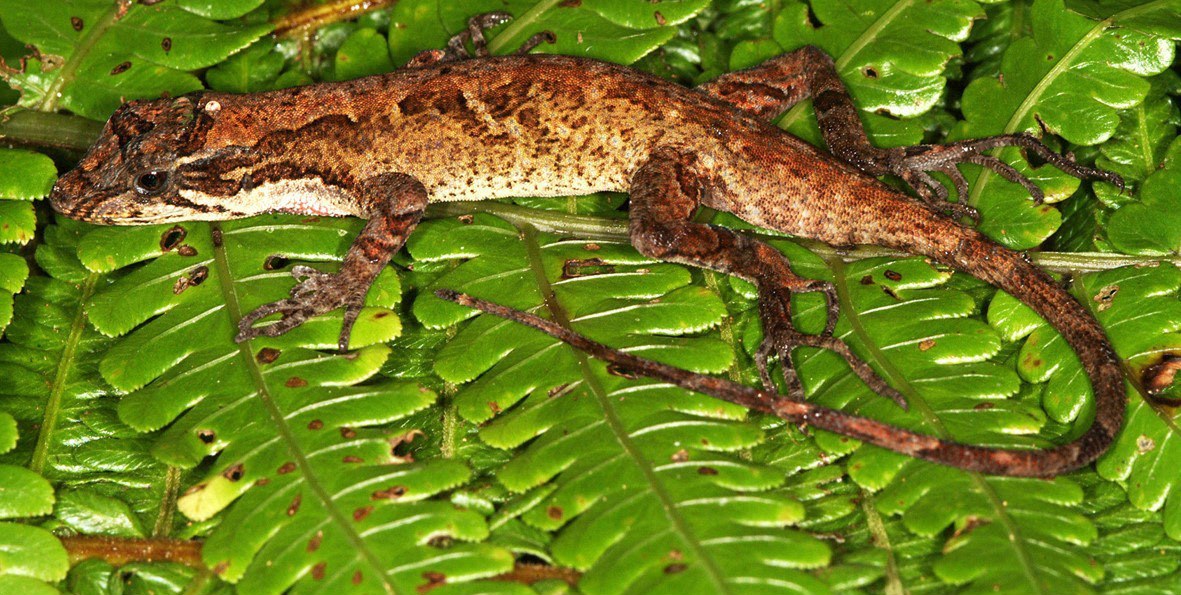
Home, Sweet Fern Leaf
Photo: Gunther Köhler, from Köhler et al. 2014 (CC BY-ND 4.0), reproduced with permission in Kaiser & Kaiser 2021, Herpetology Notes
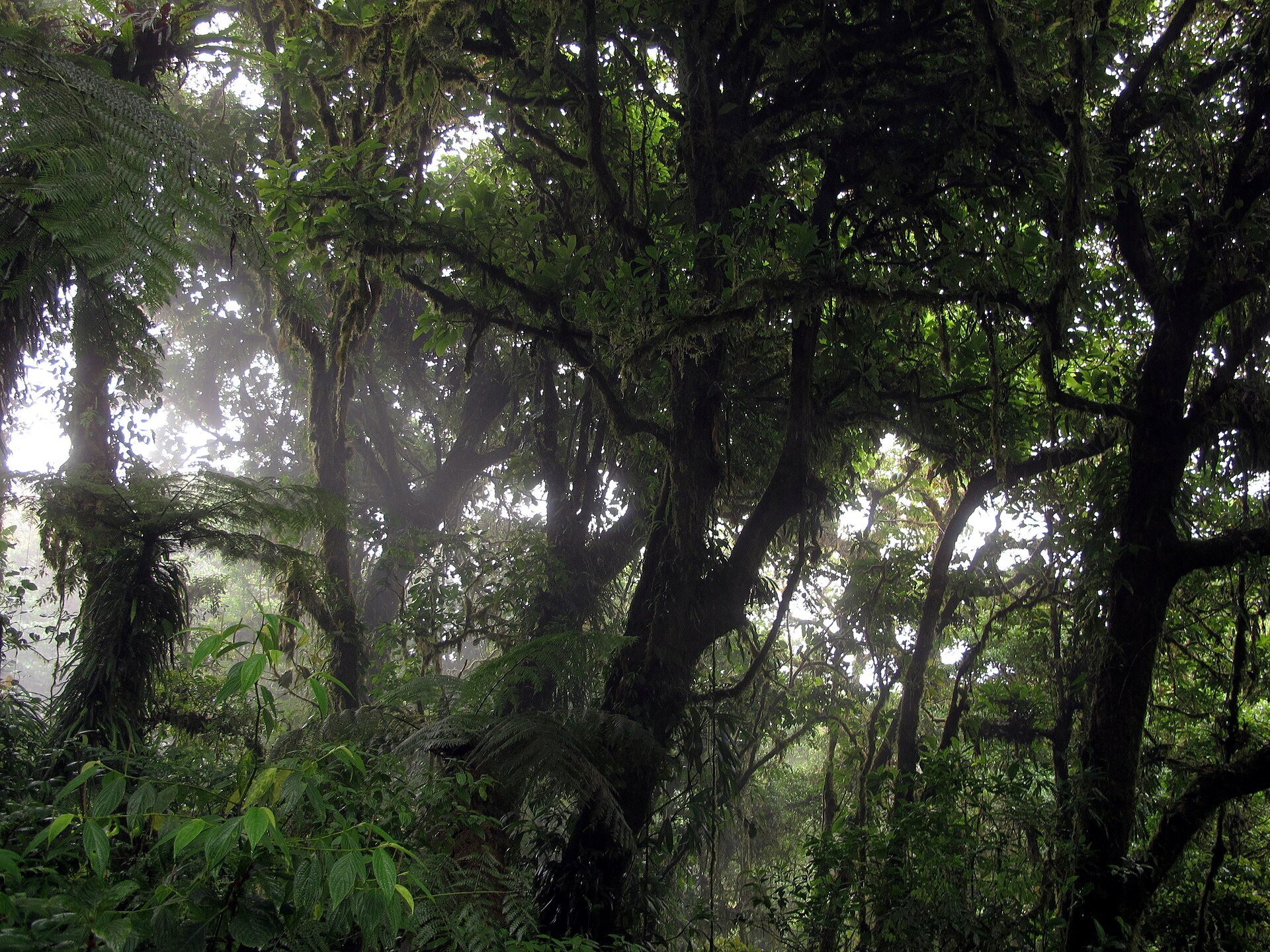
Between seven o'clock and midnight, the cloud forest at Monteverde belongs to the night shift. The lizards are asleep. If you walk slowly along a trail with a headlamp, you can find them lying on leaves, perfectly still.
In the spring of 1987 I spent more than five weeks doing exactly that. I wanted to answer a question that sounds almost childish: does a lizard have a bed? Does it come back to the same leaf each night, the way we come home to the same pillow?
The answer, it turned out, was "sometimes". About a third of the lizards I followed did come home to roost.
A lizard with a face you can remember
The lizards were anoles, a huge group of small lizards from the warmer parts of the Americas and a favourite of behavioural ecologists. Their territories and home ranges have been studied in great detail. How individual anoles sleep had received very little attention.
My species was the Costa Rican Cloud Forest Anole, Anolis leditzigorum. It is a medium-sized anole: the largest ones measure about 60 mm from the tip of the snout to the vent (the opening under the base of the tail). By day these anoles perch head-down on stems and tree trunks and watch the leaf litter below for insects and other small prey.
Back then the species did not even have its current name. Until 2014, when Gunther Köhler and his colleagues described it as a new species, these lizards would have been counted as a different anole, Anolis tropidolepis. So in a sense I was watching an animal that science had not yet told apart from its neighbours.
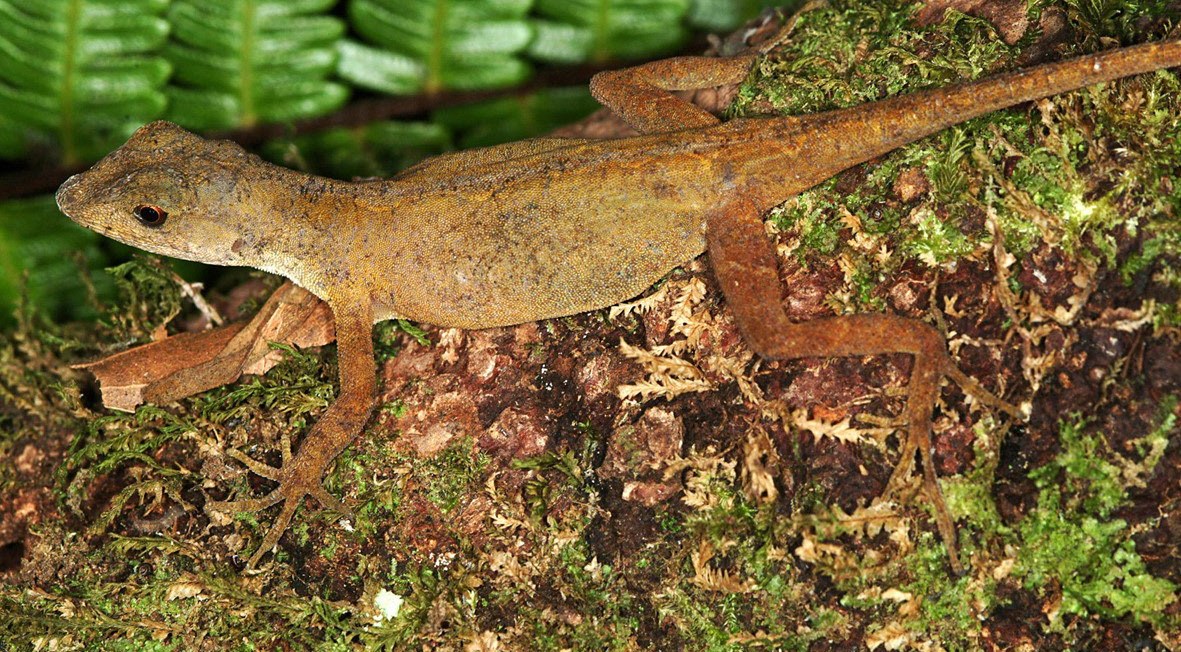
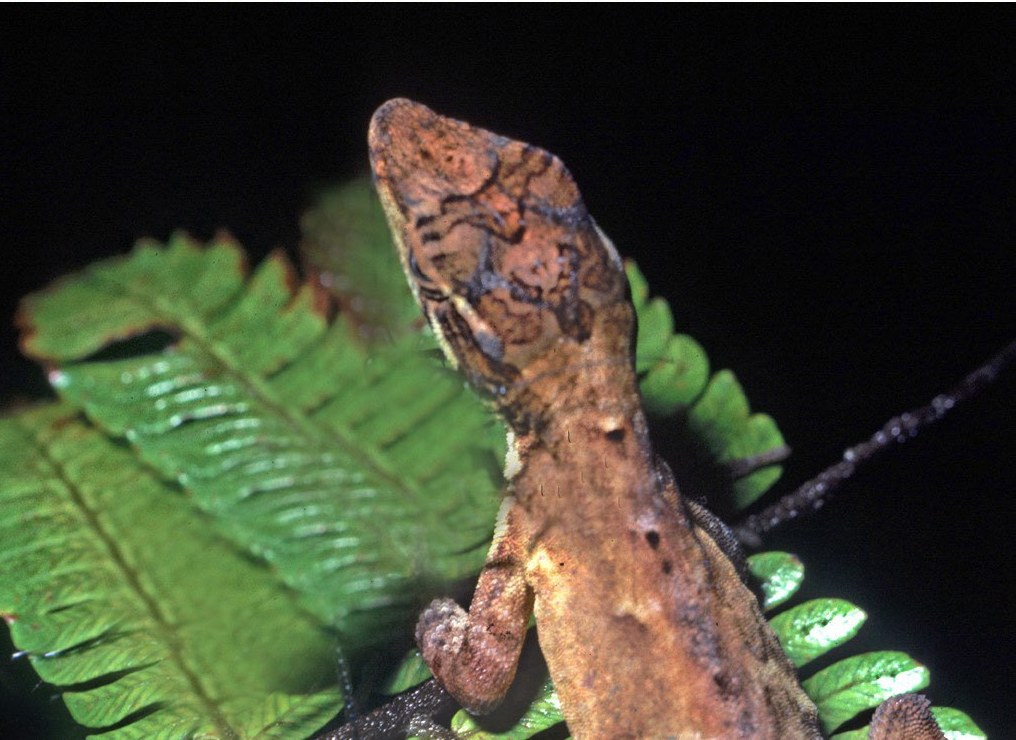
What made the species ideal is that every lizard looks a little different. Size, colour and the pattern of dark spots and lines vary so much that each one can be recognised on sight, so I never had to catch or mark them and risk changing how they behaved. This was 1987, before digital cameras and mobile phones. Every lizard went into my notes as a sketch and a written description.
Counting beds by headlamp
I was a student at the University of California, Santa Barbara, and its Education Abroad Program had brought me to Costa Rica. I worked in the Monteverde Cloud Forest Biological Reserve, along the riverbank path called El Río Trail and part of the Bosque Nuboso Trail, at about 1,400 metres above sea level. From 17 April to 25 May, I walked these paths between 19:00 and midnight. Nights were mild and steady, between 14 and 17 °C, with little rain and hardly any wind.
Each time I found a sleeping anole, I marked its leaf with a strip of flagging tape, taking care not to disturb the lizard or the plant. Then, roughly once a week, I walked the whole route again to see who was sleeping where. The gap was deliberate: a lizard had a full week to wander off and choose a new bed if it wanted to.
There should have been a fifth count. It never happened, partly because time ran out and partly because a large wild cat was in the area.
Who came home
In total I found 45 anoles sleeping at 36 different spots. Here is what happened to those beds over the following weeks:
- At 20 of the 36 sites, the original sleeper never came back.
- At 13 sites, the same individual returned. At ten of these there was one count when the bed was empty, and then the owner was back at a later count. No bed with a returning owner stood empty for more than one count.
- At seven sites, the occupant changed: a different lizard had moved into a leaf that another anole had used before.
Put another way, the anoles came back to exactly the same leaf about 30 percent of the time, some of them after a week away. For a small lizard in a forest full of leaves, that is a remarkable amount of loyalty.
Head toward the stem
The lizards were also choosy about how they slept. Fern leaves made up 71% of the sleeping sites, far more than you would expect by chance. And on those leaves, the anoles mostly lay with their snouts pointing toward the base of the leaf, where it joins the stem (73% of the time). Only 18% faced the tip. Three slept crosswise on the leaf, and one slept on the stem itself.
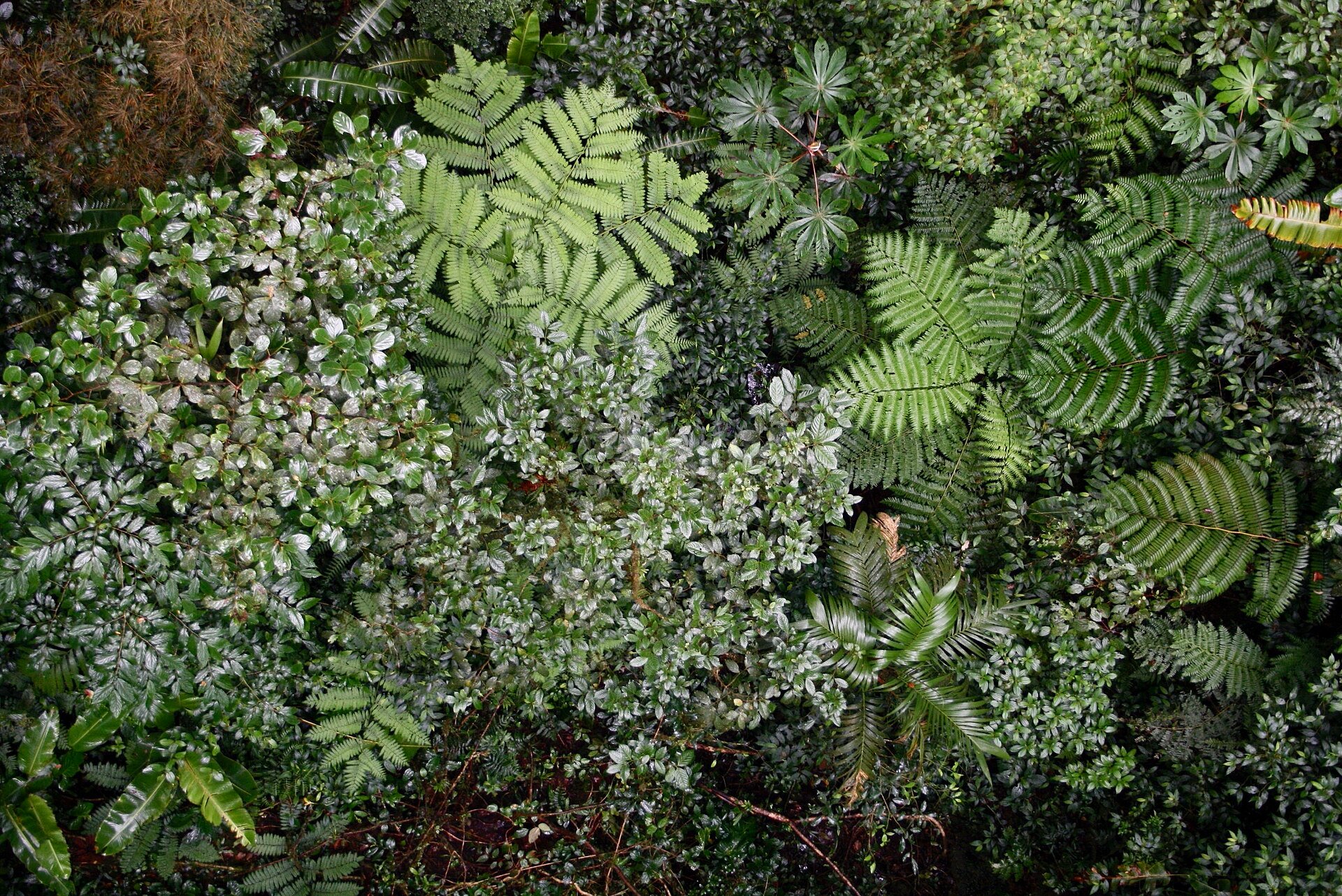
We can only guess why. One idea is escape. Nights in the forest are not safe: bats and rodents hunt there, and a predator might learn where lizards sleep. An anole facing the stem can run straight down the plant into the lower, denser vegetation and the leaf litter. An anole facing the tip has only one way out: a leap into the dark. Ferns might also help simply by being more ragged and irregular than ordinary leaves, but we do not know.
Why don't more lizards come back every night? Each lizard has its own day behind it. If an anole finds good hunting far from yesterday's leaf, the trip home may not be worth it when the forest offers so many other beds. Yet different lizards kept taking over the same leaves, which suggests that some leaves may simply be better beds than others.
Our limited data show in a snapshot that some lizards really do select and utilise a "home, sweet home." — Kaiser & Kaiser 2021
A notebook that waited
These observations were published in 2021, 34 years after I made them, when Hinrich and I wrote them up together for Herpetology Notes. The sample is small, and today the same study would use a phone camera and GPS. But we could find no other published study that followed how individual anoles sleep, rather than a whole population. Sometimes a sketchbook, a headlamp and some patience are enough to notice something no one has written down before.
The papers
- (2021) Coming home to roost: comments on individual sleep-site fidelity, sleep-site choice, and sleeping positions in Anolis (Norops) leditzigorum Köhler et al., 2014 in Costa Rica (Squamata: Dactyloidae) Herpetology Notes 14: 375–378