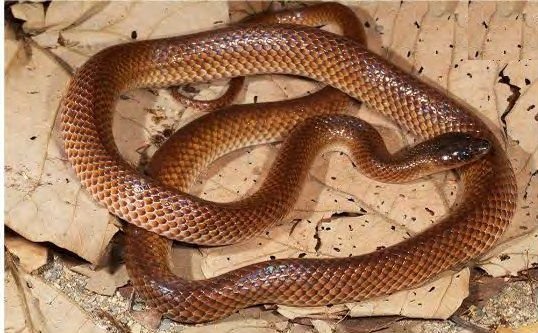
A Snake in the Sawdust
Photo: from Kaiser et al. 2021, Zootaxa
In 1927, the British physician and naturalist Malcolm Smith, founder of the British Herpetological Society, wrote this about Timor:
"From a herpetological point of view, Timor is one of the most disappointing places that one can visit. Considering its size and its position in the Tropics, there is probably no other island so barren in reptilian and batrachian life." — Malcolm Smith, 1927
(Batrachians are amphibians.) Eighty-five years later, a brown snake that nobody had ever named slid across the floor of a forest on Timor's south coast. It is now called Stegonotus nancuro, and it is one of many reasons to think Smith was wrong.
An island nobody had looked at
Timor-Leste, the eastern half of Timor, was a Portuguese colony for centuries and then occupied by Indonesia for a quarter of a century. It regained its independence in 2002. In all that time, very little biology was done there. We counted only five short publications on its reptiles and amphibians by Portuguese researchers in 450 years.
That changed after independence. Over the following decade, Hinrich, Mark O'Shea and our colleagues, with student teams from Victor Valley College in California and Philipps-Universität Marburg and with East Timorese support, surveyed amphibians and reptiles in every one of the country's municipalities and on both of its offshore islands. It was the first survey of its kind in Timor-Leste.
A small fauna under pressure
The frogs were the first to get a chapter of their own. In 2014, Hinrich, Mark and I wrote a chapter on the amphibians of Timor-Leste for a book on the conservation of Asia's amphibians. The title said it all: a small fauna under pressure.
There are not many frogs on Timor, and even the familiar ones were a puzzle. The rice paddy frogs had been called by names that, it turned out, belong to species that do not live on Timor at all. We found at least three kinds, and none of the old names fit. The treefrogs were just as uncertain.
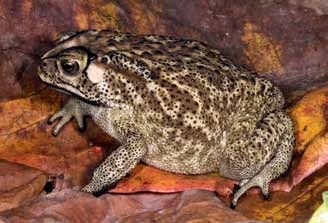
The only toad in the country is not native. The Asian black-spined toad seems to have arrived during the Indonesian occupation or with United Nations peacekeepers, and it has spread across much of the country. Its local name in Tetum is Manduku INTERFET, after INTERFET, the International Force for East Timor.
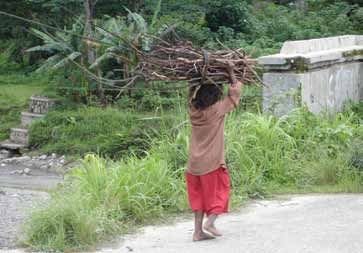
The pressures on Timor's wildlife are old. For centuries, traders stripped the island of sandalwood. Colonial powers then planted coffee, whose shady plantations look like forest but hold far fewer kinds of animals, and introduced maize, which needs cleared land and leads to erosion on Timor's steep hills. People also need firewood, and gathering it often falls to children, sometimes instead of going to school.
Yet we ended that chapter with hope. The country was designating nearly 30 protected areas, its new postage stamps featured amphibians and reptiles, and its president was considering a new nature reserve.
The forest at Nancuro
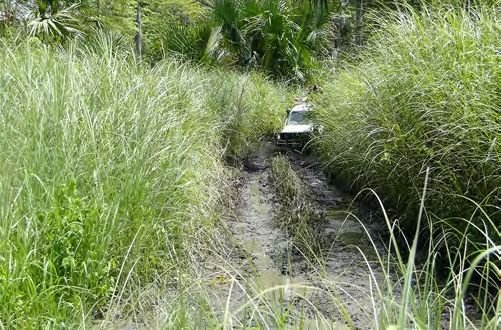
In 2011, President José Ramos-Horta began an effort to protect one special place as a nature reserve: Nancuro, a strip of coast in the far south of Manatuto Municipality. It is one of the last lowland forests left along Timor's coast: moist, humid forest on sandy soil, full of fallen and rotting logs, with scrubby beach forest on one side and a sea of grass more than two metres tall on the other. It has been identified as an Important Bird and Biodiversity Area under the criteria of BirdLife International.
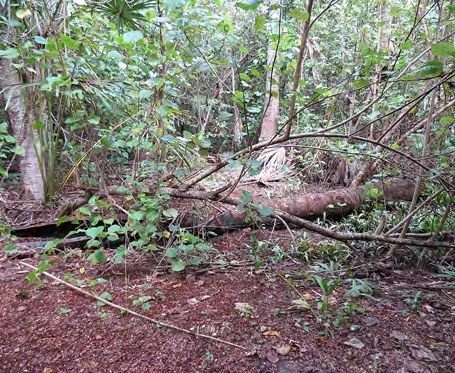
The first of the new snakes was actually found elsewhere. In November 2010, Luis Lemos de Araujo, one of our former Timorese students, collected one resting by day inside a rotting, six-metre tree near Betano, about 40 kilometres to the west. More followed at Nancuro in 2011, 2012 and 2014.
On 3 July 2012, Caitlin Sanchez, one of the students, spotted a brown snake moving across the forest floor. Sven Mecke and Hinrich chased it into a rotting tree, and Mark pulled it by hand out of the soft, sawdust-like wood inside. That snake, a female, became the holotype, the one specimen that anchors the species name. The same day, a young snake turned up coiled tightly under the bark of a standing dead tree.
Proving it was new
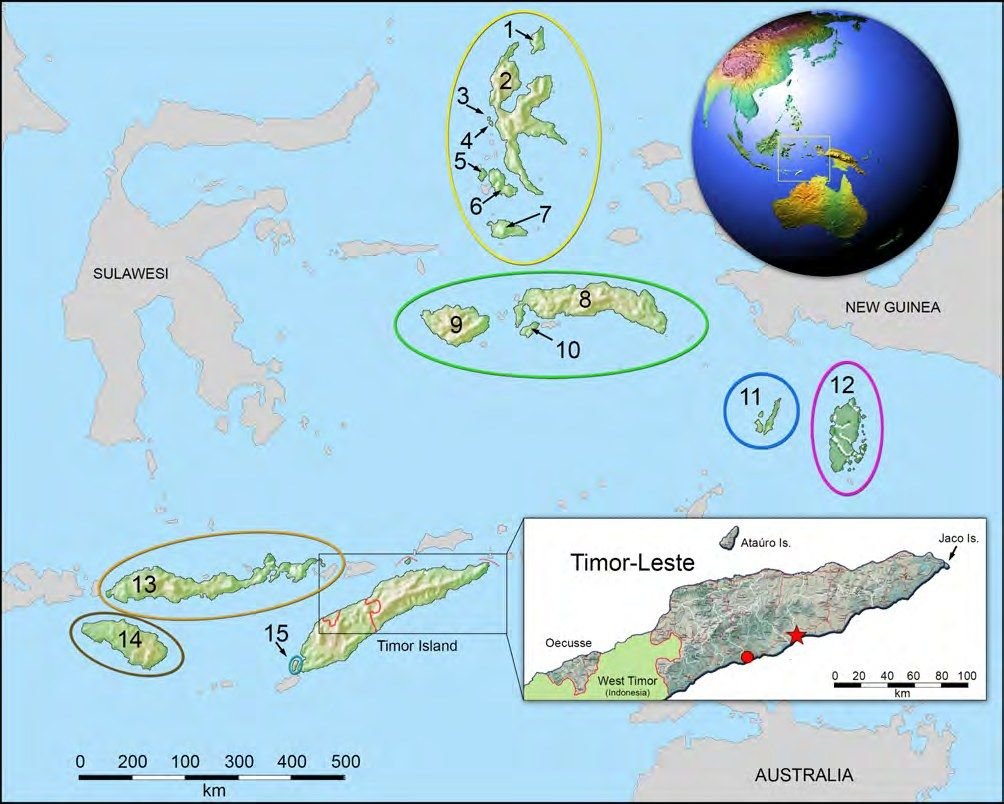
Timor is surrounded by islands with their own groundsnakes: Flores, Sumba, the Maluku islands, and the tiny island of Semau just off Timor's western tip. To name the Timor snake, we had to show it was none of these. That work was done in museums, with the same methods we had used for the snakes from New Guinea and Borneo: counting scales, measuring head scales on photographs, and comparing every species in the region, one by one.
For this paper we introduced a shorthand we call the labial scale formula. It packs four lip-scale features into one line. The Timor snake's formula is 73+4 | 94: seven scales along the upper lip, with the third and fourth touching the eye, and nine along the lower lip, with the first four touching the large paired scale under the chin. A formula like this lets anyone compare species at a glance.
We also found a clear difference between the sexes. The one adult female has 61 scales under her tail, while the males have 71 to 75.
The species it most resembles is S. lividus from Semau. That snake has its own long and curious history, told elsewhere on this site. But the two differ in the size and position of the nostrils, in the scales on the chin, and in colour: the Semau snake is lead-grey with a violet sheen, while the Timor snake is warm brown.
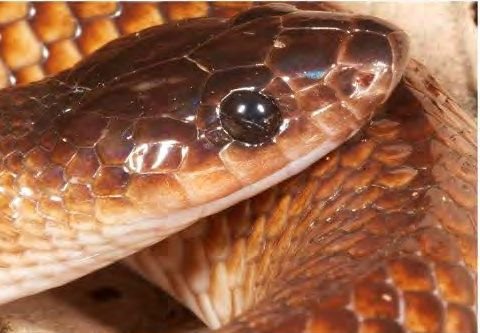
That colour is unusual. Along the back the snake is an even brown, but toward the sides each scale fades from a dark brown centre to a pale edge, and the lowest scales are almost cream. The belly is plain cream.
A name suggested by a president
We named the species Stegonotus nancuro, after the place. Nancuro is a Tetum word for a place where fish are caught: nan means meat or fish, and curo is the act of catching something with a round net. The name was suggested by José Ramos-Horta himself, the former president who had begun the effort to protect Nancuro. We dedicated the paper to him on the 25th anniversary of his Nobel Peace Prize.
We hope a snake that lives nowhere else will give new strength to the plan to protect this forest. The island still has much to show. More than 20 species of amphibians and reptiles from the islands of Timor's arc are known to be waiting for formal names. Hinrich, Mark and I have also written a new overview of the snakes of Timor-Leste, their diversity, natural history and conservation, which is forthcoming in the book Snakes of South Asia.
Timor, it turns out, is anything but disappointing.
The papers
- (2014) Amphibians of Timor-Leste: a small fauna under pressure Conservation Biology of Amphibians of Asia (H Heatwole & I Das, eds.). Natural History Publications (Borneo), Kota Kinabalu, Sabah, Malaysia pp. 361–370
- (2021) A new species of Stegonotus (Serpentes: Colubridae) from the remnant coastal forests of southern Timor-Leste Zootaxa 5027(4): 489–514
- (2026) The snake fauna of Timor-Leste: an update on diversity, systematics, natural history, and conservation Snakes of South Asia: Discovering Hidden Diversity; Conserving a Changing Legacy (I Das, A de Silva, KDB Ukuwela, ND Rathnayake & S Karunarathna, eds.). Amphibia & Reptile Research Organization, Gampola, Sri Lanka pp. 174–197 (in press)