The Third Snake from Semau
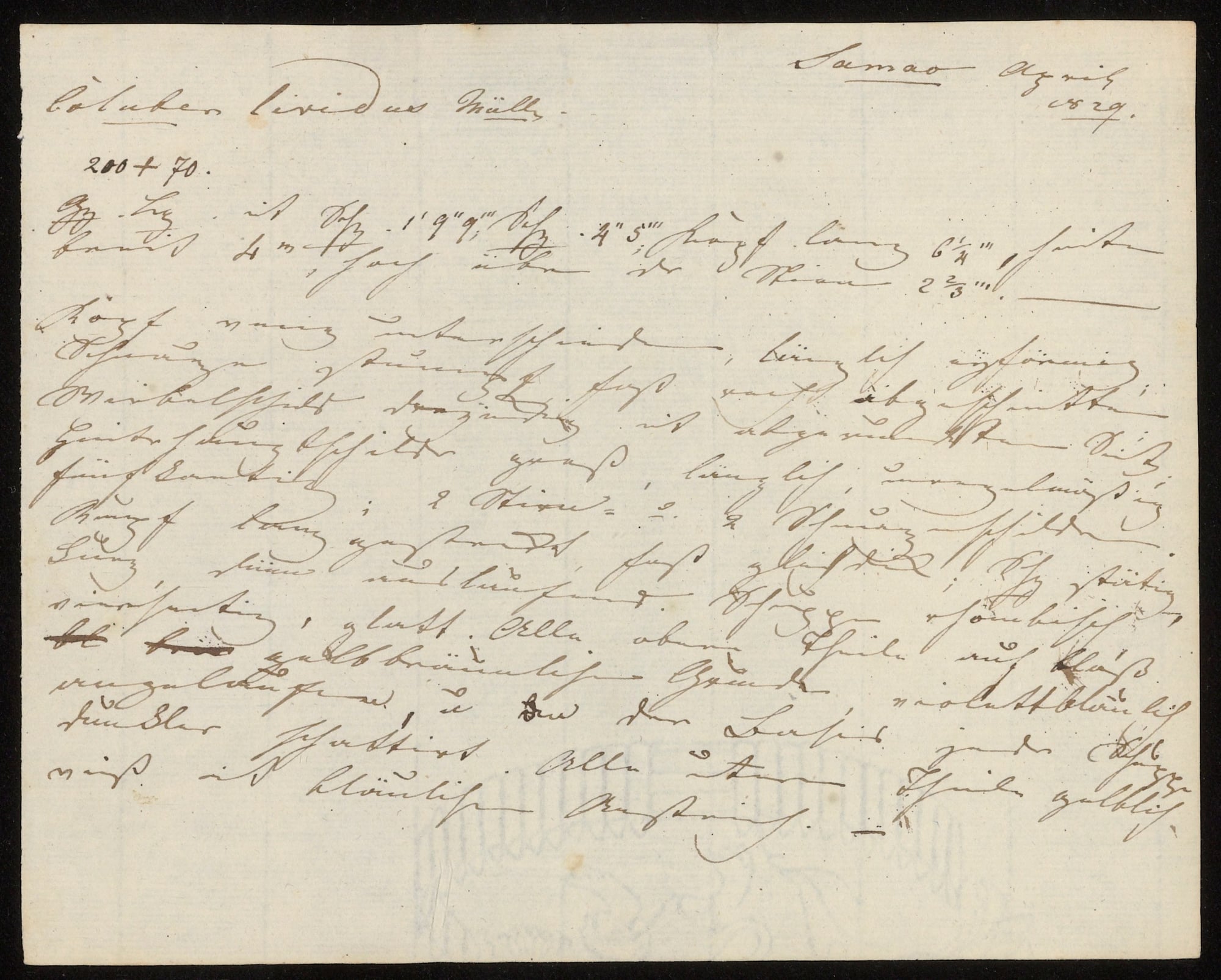
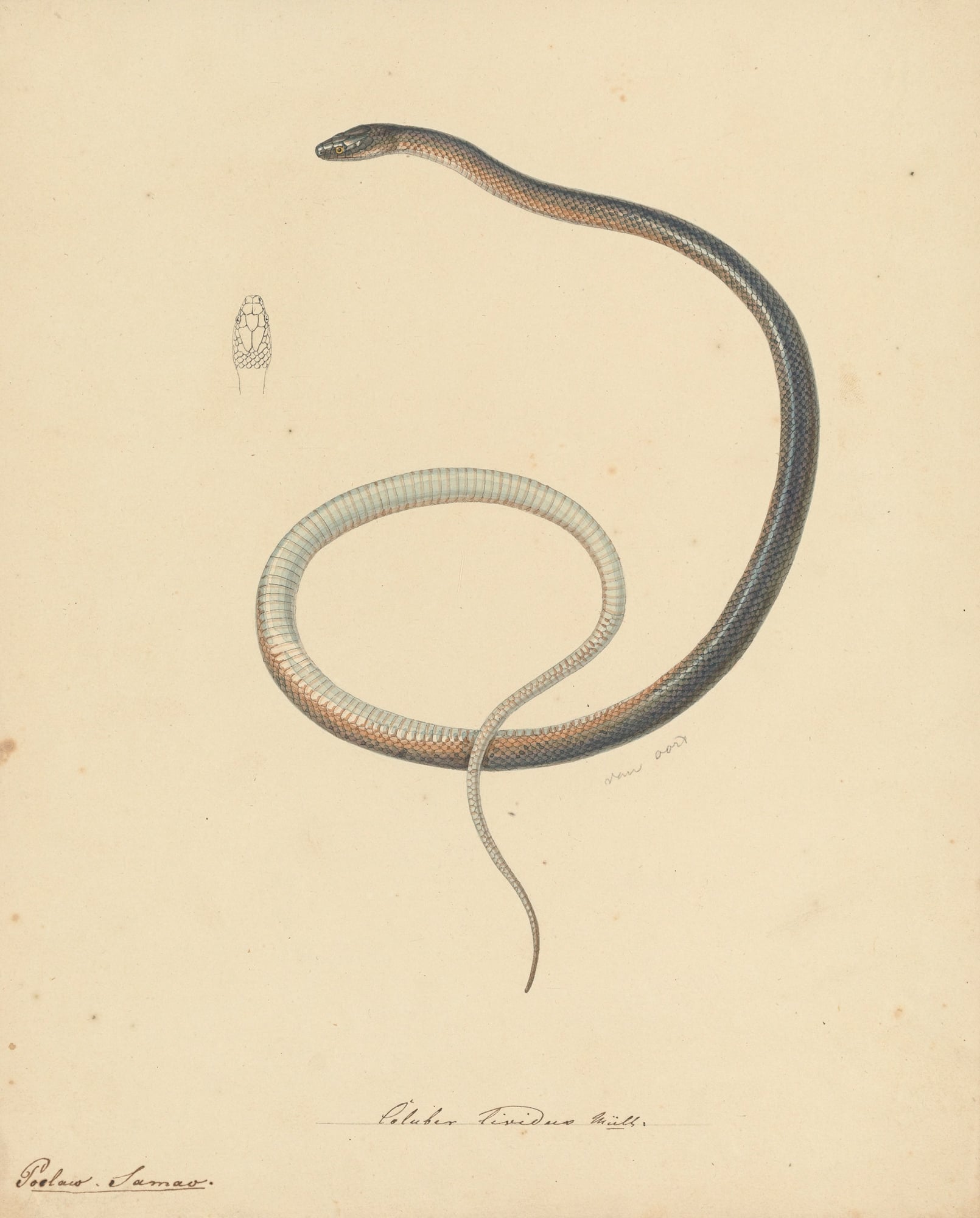
Manuscript: Salomon Müller, 1829, from Kaiser et al. 2021, Zootaxa
Sometimes a discovery hides in a sentence that everyone has read. In 1854, three zoologists in Paris described a lead-coloured snake from Semau, a small island off the western tip of Timor. Near the end of their description they added a line in French: "Our national collection received another one from the same museum."
We had read that page. So had other herpetologists before us. None of us had asked the obvious question: where is that other snake now?
Two snakes in Leiden
The snake is Stegonotus lividus, one of the Indo-Papuan groundsnakes that I had spent years sorting out for my doctoral thesis. In our 2018 history of the genus, we listed its original specimens as two females in the Leiden museum in the Netherlands, collected on Semau around 1829. The 1854 description had been based on more than one snake but gave scale counts for only one, so we picked one of the Leiden pair as the official name-bearer, the lectotype.
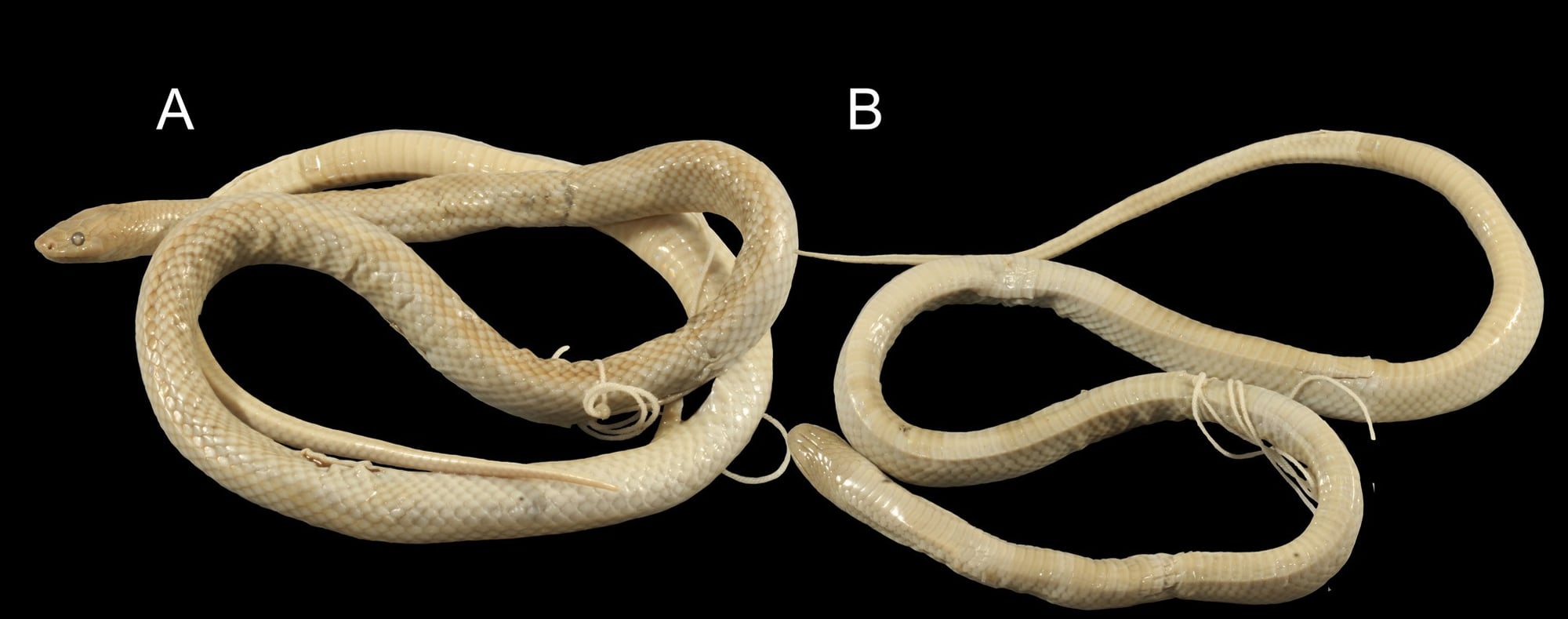
Something did not quite fit. The numbers printed in 1854, especially the count of scales under the tail, did not exactly match either Leiden snake. The printed measurements also made the tail a quarter of the snake's total length. In the Leiden snakes it is about a fifth, and no other groundsnake has such a long tail for its body. In 2018 we put the differences down to ordinary counting error.
A snake filed under "Pulo Samas"
Then, while going through groundsnake records from the Lesser Sunda Islands, we came across a snake in the Muséum National d'Histoire Naturelle in Paris. It was catalogued as "Stegonotus sp." from "Pulo Samas", number MNHN 3414, and it fitted the overlooked sentence. A query to Nicolas Vidal in Paris confirmed that the snake was there. "Pulo Samas" is a misspelling of Pulau Semau, and the Paris database had placed it in Stegonotus rather than Lycodon, the genus it was first described in. Anyone looking for a Lycodon from Semau, as we and others had done, would have missed it.
This was the third member of the original series, and the most important one. Its scale counts and body length were a close match to the numbers printed in 1854, so it was the very snake the Paris zoologists had described in detail. Nicolas also checked its sex by dissecting the base of the tail, where he found the paired muscles that only males have. It was a male, the first and still the only male of the species known.
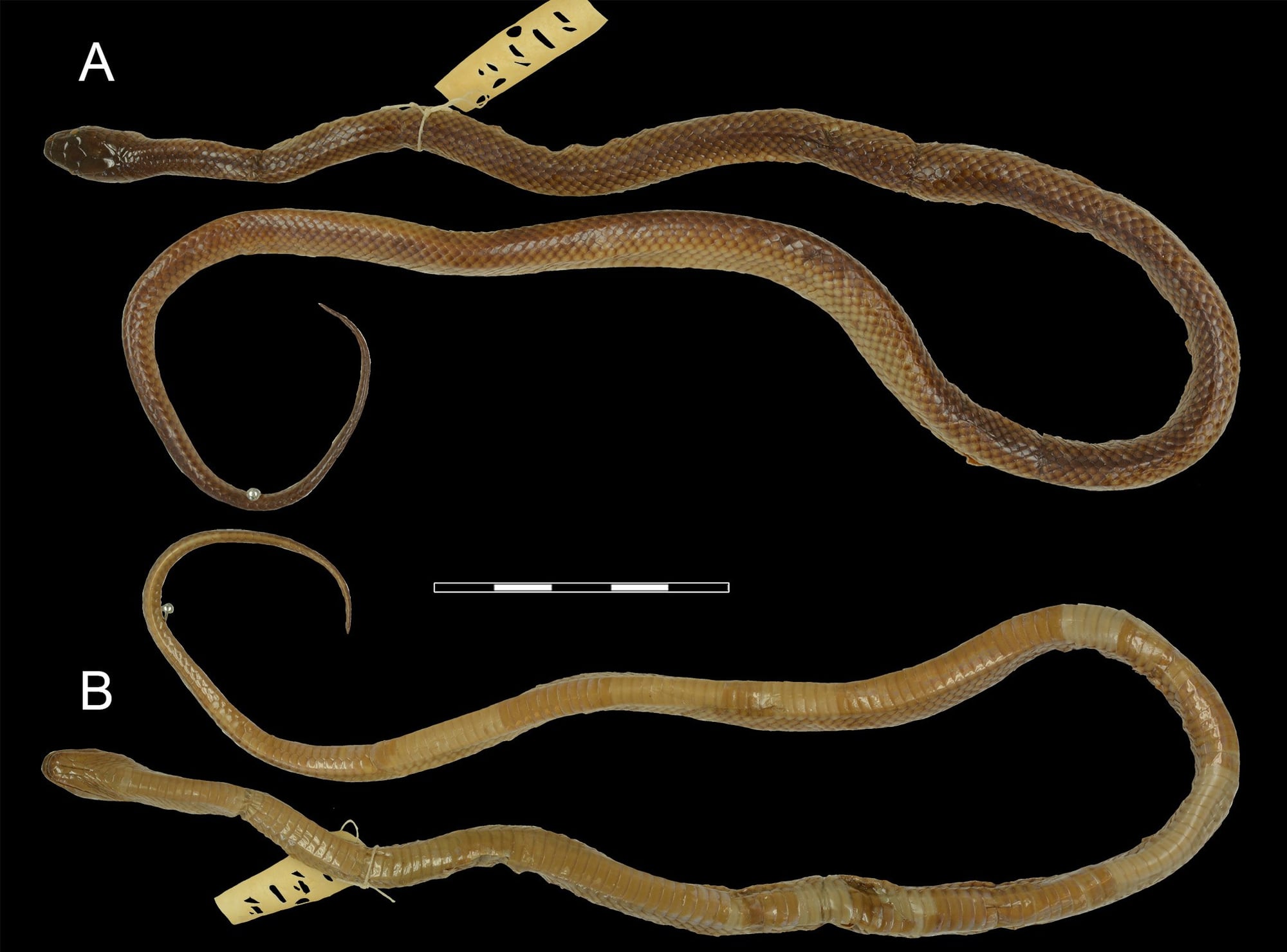
We measured it from Nicolas's photographs, scaling the snake against a ruler in the picture. Its tail was 111 mm long. The 1854 book says 140 mm. The authors wrote their notes by hand before they were set in type, and their handwriting was flowery. If a "1" was misread as a "4", the mismatch disappears, and the snake's proportions become normal again.
How a snake travelled from Leiden to Paris
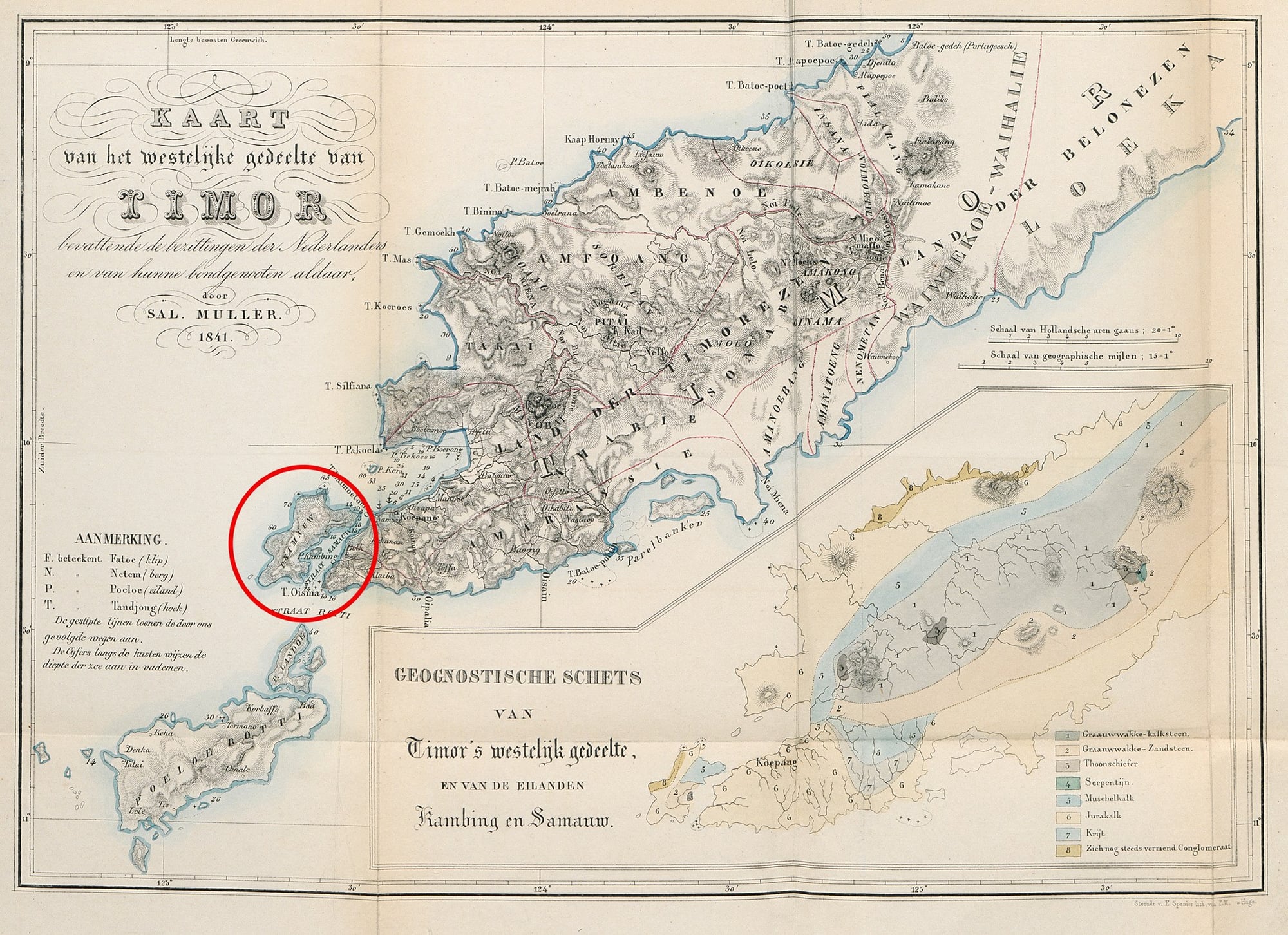
The Semau snakes were collected by the Natuurkundige Commissie, the Natural History Commission for the Dutch East Indies. Its members paid a terrible price. Heinrich Kuhl died of hepatitis in 1821, Johan Coenraad van Hasselt of amoebic infection in 1823 and Heinrich Boie of malaria in 1827. On 14 October 1828 the survivors landed at Kupang on Timor. From there, the German naturalist Salomon Müller, his colleague Heinrich Macklot and the Dutch artist Pieter van Oort explored the interior and the offshore islands. Macklot was killed in an uprising on Java in 1832, and Van Oort died of malaria on Sumatra in 1834. Of the three, only Müller made it home, in 1837.
Collectors in the field sent their specimens home whenever they could, in case they never made it back themselves. We think the Semau snakes reached Leiden in late 1834. In April 1835 Hermann Schlegel of the Leiden museum travelled to Paris to work in its reptile collection for three months. He went by boat, which let him bring far more material than a carriage could carry. In Paris he worked with Gabriel Bibron, the hands-on expert behind the great French encyclopedia of reptiles, and specimens and notes were exchanged. One Semau snake stayed in Paris, and Bibron saw Müller's handwritten description of it.
Müller's own page
Müller never published a description of his snake. In 1854 the Paris authors named it Lycodon lividum and credited the name to "Salom. Müller. Manuscrit." But what exactly had Müller written?
A team including Eulàlia Gassó-Miracle of the Naturalis Biodiversity Center in Leiden had put the Commission's unpublished papers online in 2020. Eulàlia found Müller's page for us, together with an unpublished coloured painting by Van Oort. At the top right, Müller wrote "Samao April 1829". At the top left he named the snake "Coluber lividus Müller". The next line reads "200 + 70", his counts of the belly scales and the scales under the tail.
Reading the rest took help. A colleague in Marburg with a remarkable gift for old handwriting helped us decipher it. Müller used abbreviations throughout, such as "Gz. Lg." for ganze Länge, total length. His "and" is written as an underlined backwards "e", probably a descendant of a shorthand sign for the Latin et that goes back to ancient Rome. He described the snake's upper side as pale yellow-brown with a "violet-bluish tarnish". That was probably an iridescent sheen, and it may be why he chose the name lividus, "lead-coloured".
Feet, inches and lines
Müller measured his snake in feet, inches and "lines", a twelfth of an inch. But whose feet? Before the metric system spread across Europe, units varied from one realm to the next. Müller had studied at Heidelberg, in the Grand Duchy of Baden, where a foot was 300 mm. Scientists more widely used the old French foot of 324.8 mm.
The snake decided it. With French units, Müller's numbers give a snake 589 mm long with a 120 mm tail. One of the Leiden snakes measures 600 mm with a 120 mm tail. With Baden units the tail would be 135 mm, more than 10% too long. So the French units are the right ones for the Commission's notes, and Müller's page almost certainly describes a snake that is still in Leiden.
Who owns a name?
The manuscript also made us correct ourselves. In 2018 we had written the author of the name as "Müller in Duméril et al., 1854". Under the International Code of Zoological Nomenclature, the rulebook for naming animals, a name belongs to whoever first publishes it with a description. Being credited is not enough; the publishers would have had to quote the manuscript directly. Once we could compare Müller's actual words with the 1854 text, it was clear they had not. Neal Evenhuis, a member of the International Commission on Zoological Nomenclature, patiently helped us through the fine print. The species is correctly written Stegonotus lividus (Duméril et al., 1854).
There is one loose end. Müller counted 200 belly scales and 70 under the tail. None of the three snakes we know has exactly those numbers. Perhaps a fourth snake from Semau once existed.
"… natural history collections hold a cornucopia of data about organisms and their environment, a treasure trove of information that is more relevant and important than any 2 TB memory stick in the palm of one's hand." — Kaiser et al. 2021
Only three preserved specimens of this snake are known, and now we know where all three are. When we described a new groundsnake from the south coast of Timor-Leste the same year, the species it most resembled, alongside one from the Moluccas, was Müller's snake from Semau.
The papers
- (2018) The taxonomic history of Indo-Papuan groundsnakes, genus Stegonotus Duméril et al., 1854 (Serpentes, Colubridae), with some taxonomic revisions and the designation of a neotype for S. parvus (Meyer, 1874) Zootaxa 4512(1): 1–73
- (2021) Three’s Company: discovery of a third syntype of Stegonotus lividus, a species of colubrid snake from Pulau Semau, Lesser Sunda Islands, Indonesia, with comments on an unpublished 19th Century manuscript by the naturalist Salomon Müller Zootaxa 5039(1): 56–70