Putting Snakes on the Map
Photo: Kanto Nishikawa, from Shen et al. 2025, Herpetology Notes
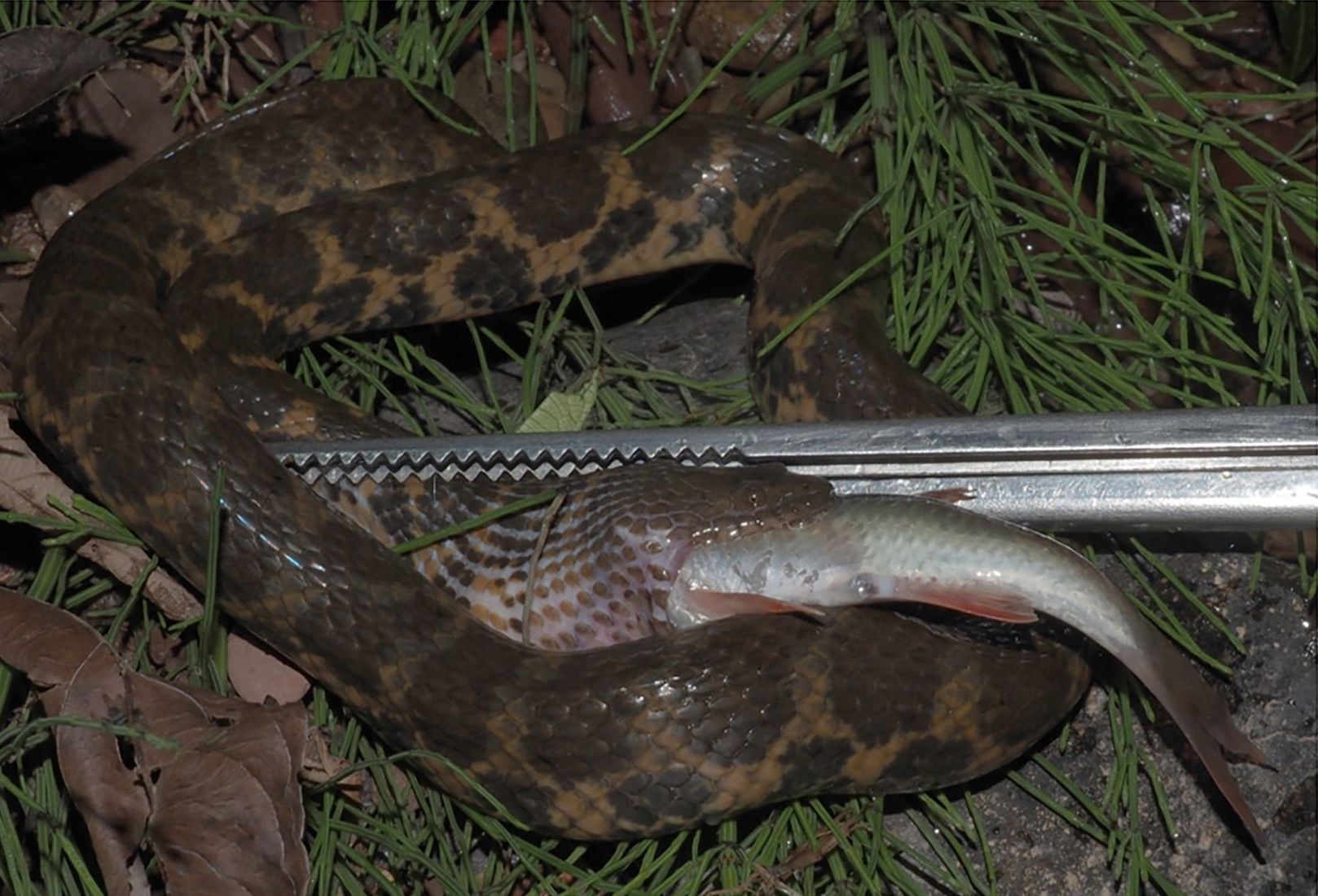
At 7:25 in the evening on 11 May 2024, beside a small mountain stream near the village of Ban Pha Sa-ngop in Laos, a snake lay on a submerged stone with a fish in its mouth. The fish was a young spiny bream about 16 centimetres long. The snake was only about four and a half times as long as its catch, and it was working its way around it.
The team that found it was out surveying small mammals and other animals in Xaisomboun Province. They caught the snake, and it promptly gave up its meal. It turned out to be one of the least-collected snakes in Southeast Asia: Angel's mountain keelback, Trimerodytes praemaxillaris. Only ten had ever been collected before.
Why one more dot matters
When you look at a map of where a species lives, it is tempting to think someone has surveyed every valley. Usually they haven't. Most range maps are drawn around a small number of dots, and each dot is a specimen in a museum or a well-documented record: an animal that someone found, identified and reported. Where there are no dots, we often simply don't know.
That is why "new records" matter. A single new dot can stretch a species' known range, change our guess about which habitats it needs, or show that it survives somewhere we had written off. Assessments of how threatened a species is lean heavily on those dots. And sometimes the absence of a dot where one used to be is the most important news of all.
This story is about two such papers, one from the mountains of Laos and one from the foothills of the Himalayas. In both, the fieldwork was done by colleagues in the region, and I joined them as a co-author.
A genus built on a baby tooth
The keelback's story begins in the winter of 1925–26, when a French ornithological expedition led by Jean Delacour and Pierre Jabouille stayed at Muang Khoun in northern Laos. Two tiny snakes collected there reached the natural history museum in Paris, where the herpetologist Fernand Angel described them in 1929.
Angel noticed a thin plate of tissue sitting in a notch at the tip of the snout, and he thought it so unusual that he created a whole new genus for the snakes. A few years later, the American herpetologist Clifford Pope looked again and saw what it really was: an egg tooth, the temporary tooth that a baby snake uses to slit open its eggshell. The two snakes were hatchlings. Their umbilical scars were still visible.
It took 55 years before anyone collected another. That one came from Thailand, about 450 km from the type locality, the place where the species' original specimens were found. The first adults were only collected in 2007. Over the following years the snake was moved between genera several times, until DNA settled it in Trimerodytes. By 2024, museums held just ten specimens.
Detectives in a travel diary
Our paper also set out to fix the type locality. Angel had written only "Xieng-Khouang", which today is the name of a whole province. Later authors offered different places, and the museum's own website put the point in the middle of Phonsavan, the modern provincial capital.
We went back to Delacour's published accounts of the expedition. He explained that "Xiengkhouang" meant both the province and its capital. The records for bird specimens he collected on the same trip were more specific: "Muang Khoun, Ancienne Xieng Khouang (détruite)", or "Muang Khoun, ancient Xiengkhouang (ruin)". Muang Khoun had been the French provincial capital. Centuries earlier it had been the royal seat of the small kingdom of Xieng Khuang, and in the early 1970s it was completely destroyed by U.S. bombing. The expedition was there from 15 December 1925 to 13 January 1926, so that is when the hatchlings were found, even though the museum only registered them in November 1928.
Delacour's notes also described the weather: sunny, dry days and nights so cold that it "froze hard" and the gardens were browned by frost, with temperatures said to drop to −7 °C. Hatchlings in the middle of that dry season fit a pattern in which the keelback breeds with the monsoon rains from May and its young hatch as the rains end.
The eleventh snake
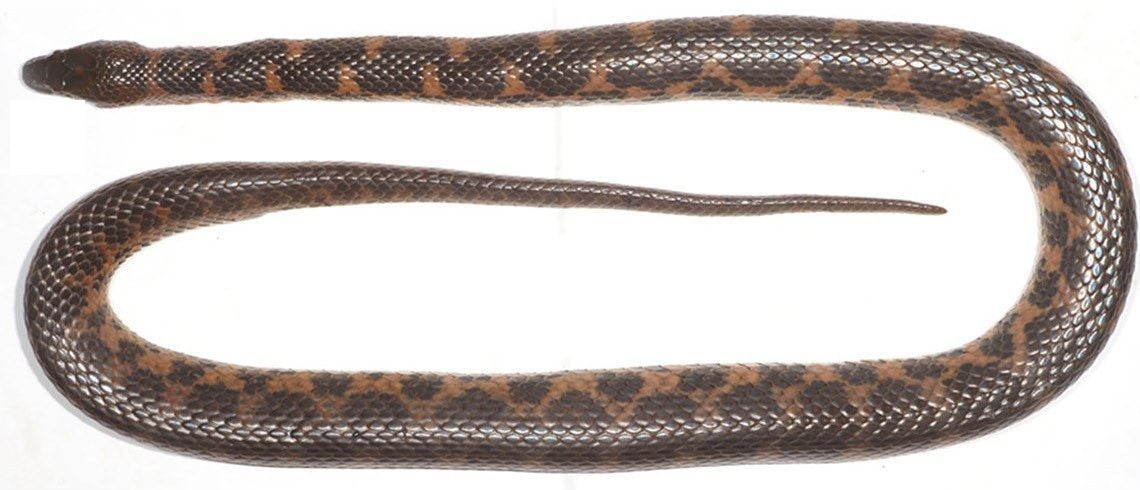
The Xaisomboun snake filled in several blanks at once. It was an adult female, about 73 cm long, and she carried two eggs in her oviducts, the first time eggs had been documented in this species. That fits the monsoon timetable perfectly: she was found in May.
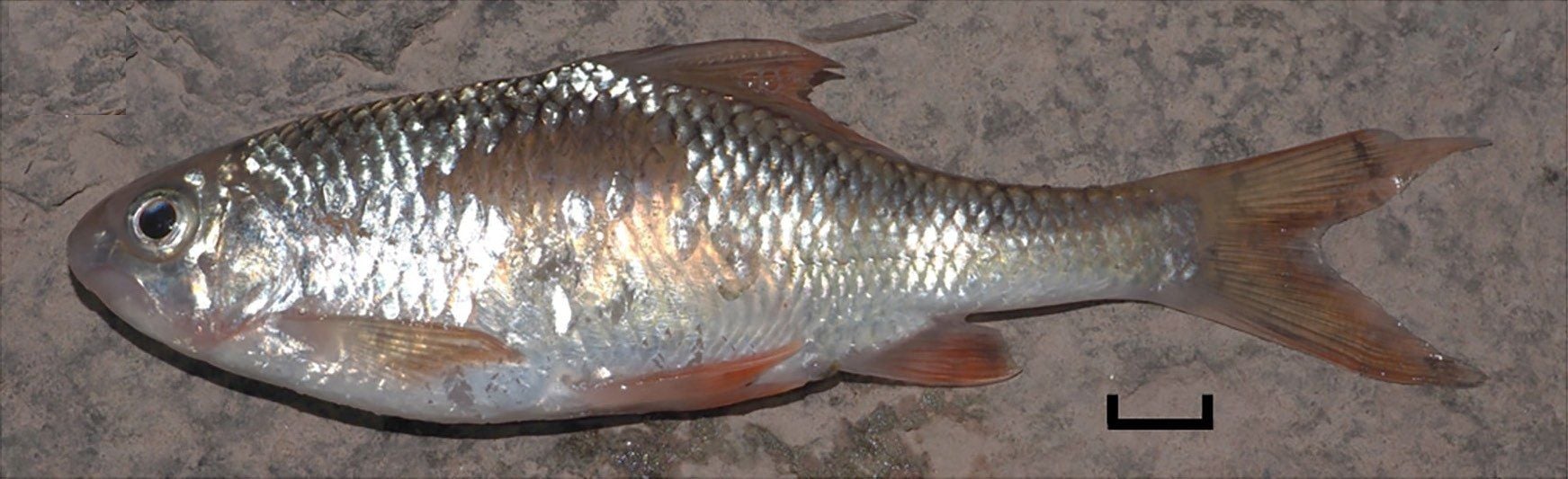
The fish was also a first. Earlier specimens had fish scales in their stomachs, but nobody had known which fish. Chanda Vongsombath of the National University of Laos and Yuichi Kano of Kyushu University identified it as a juvenile spiny bream, Scaphiodonichthys acanthopterus. For a snake to catch a fast, agile river fish like this suggests it is at home in the water and probably hunts at night.
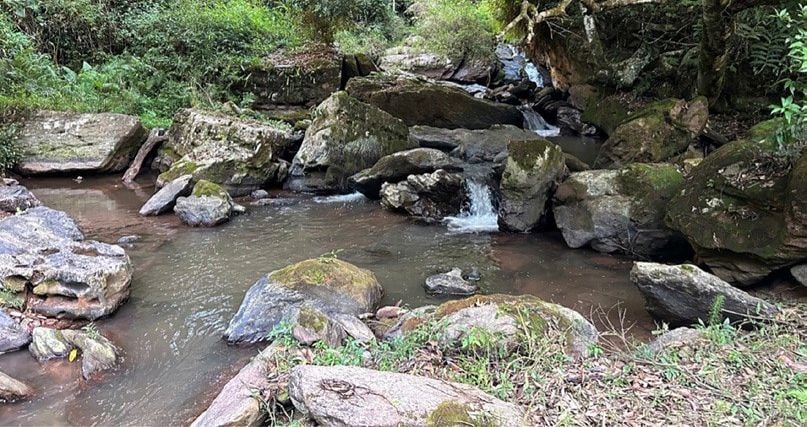
And it was a new dot. The locality is the first for Xaisomboun Province, the southernmost known for the species, and about 58 km southwest of the type locality. Every known specimen now comes from a narrow band around 19 to 20 degrees north, but from elevations between about 475 and 1,200 metres. That band lies where three of the world's biodiversity hotspots meet: Indo-Burma, the Mountains of Southwest China and the Eastern Himalayas.
The paper was led by Yanpeng Shen of Kyoto University, with Kanto Nishikawa, Daosavanh Sanamxay of the National University of Laos, Phouth Inthavong of the Xaisomboun Provincial Agriculture and Forestry Office, Hinrich Kaiser and me. I was the corresponding author. Mark O'Shea drew the map of all known localities, and Bryan Stuart and Hayley Crowell checked specimens in their museums for us. The snake and the fish are now in the collection of the Faculty of Environmental Sciences at the National University of Laos.
Three snakes in Poonch
Poonch District lies in the Pir Panjal range of the Lesser Himalayas, in the Indian Union Territory of Jammu and Kashmir. It covers 1,674 square kilometres and climbs from 760 metres near the village of Balnoi to 4,745 metres at Tattakooti Peak. Apart from scattered reports, nobody had surveyed its snakes properly.
Sarshad Hussain, of the zoology department at the government degree college in Mendhar, set out to change that. With Ali A. Shah of Baba Ghulam Shah Badshah University and Khursheed Ahmad of the Sher-e-Kashmir University of Agricultural Sciences and Technology of Kashmir, the team searched for snakes from January 2020 to December 2021: 133 field visits and 993 hours of looking. The team also ran a WhatsApp group, the "Snake Reporting Group", whose members sent in snakes whenever and wherever they saw them. Rescue calls, social media and other observers added more records.
Three of the snakes they found had never been recorded in Poonch before.
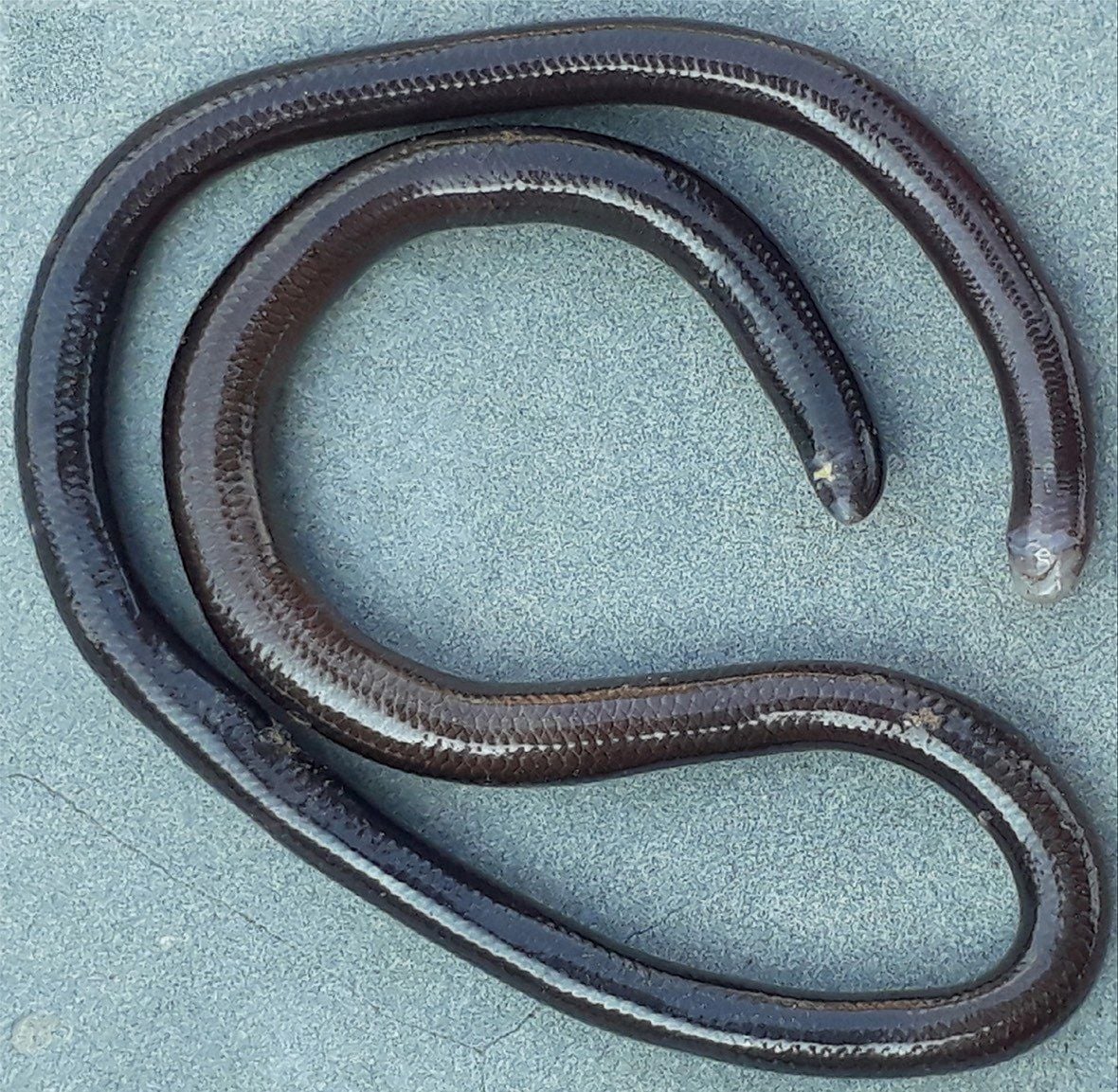
The slender wormsnake, Pseudoindotyphlops porrectus, is a glossy, brownish-black burrower with a whitish snout. It usually lives underground and turns up when people dig in the earth or take apart the roofs of kutcha houses, homes built from natural materials. After rain it comes to the surface. The team recorded 26 of them, including one that was being eaten by a domestic hen. Two kept together in a container twisted themselves into a ball.
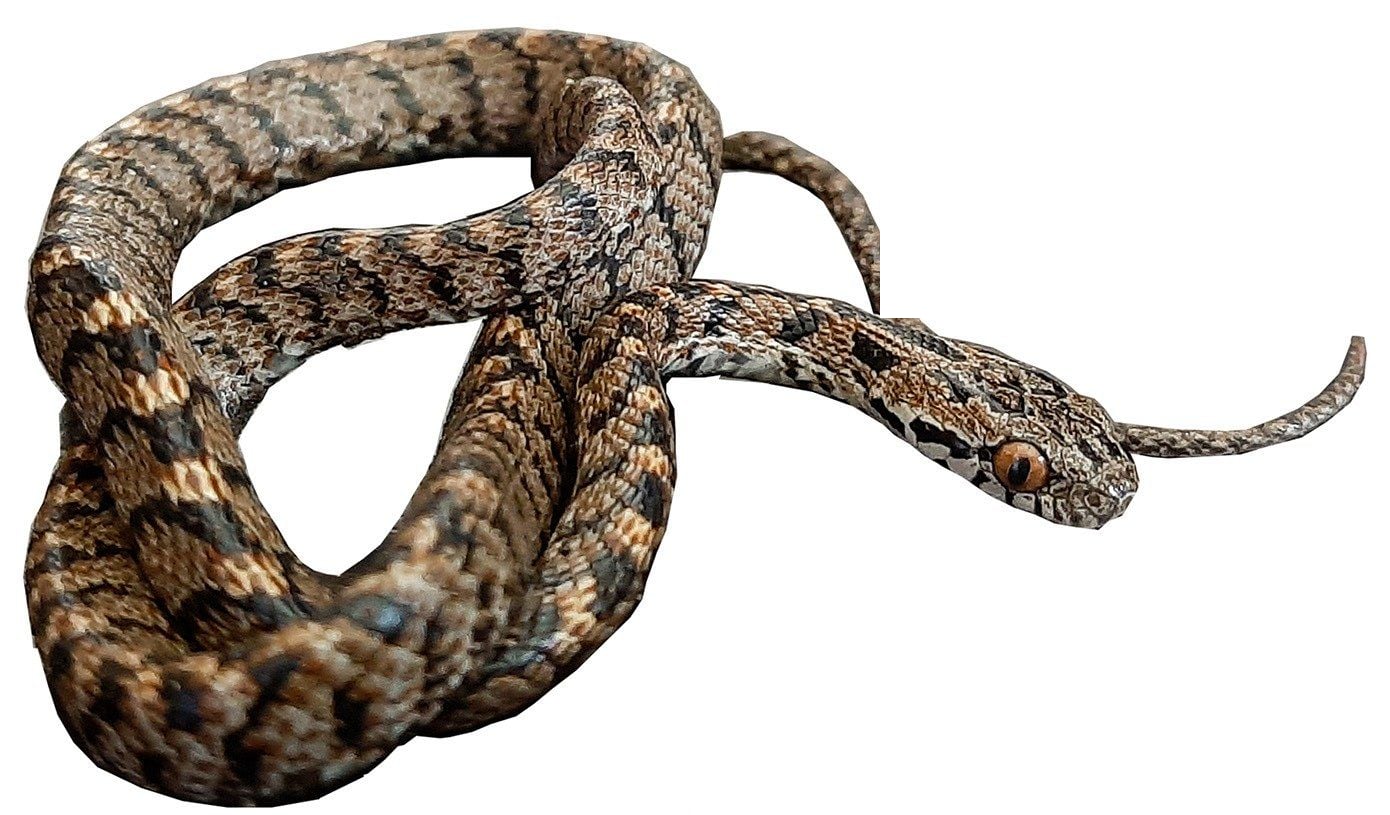
The many-banded cat snake, Boiga multifasciata, is a slender, reddish-brown snake with black V-shaped bands and large eyes with vertical pupils. It is mildly venomous. The team recorded two females, one of them inside a house. Both were docile when caught. The team documented it being active by day, although the species had previously been described as nocturnal. These records extend its known range in Jammu and Kashmir by 81 and 85 km.
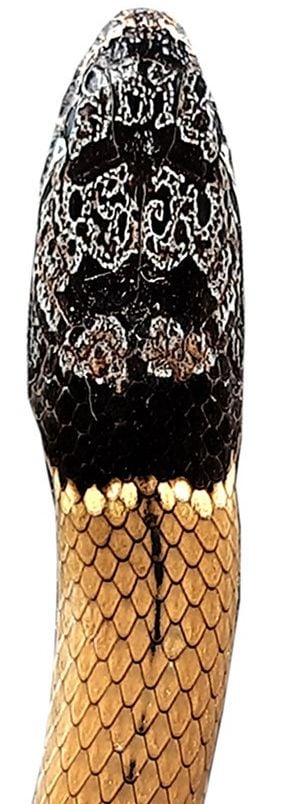
The biggest surprise was the collared black-headed snake, Sibynophis collaris. The team recorded nine. It was not just new for Poonch but for the whole of Jammu and Kashmir. The nearest previous record was in Shimla District, Himachal Pradesh, about 400 km to the southeast. It prefers hill forests and is rarely seen, which may be why earlier surveys missed it.
The scale counts in both papers drew on the definitions I had set out with Mark O'Shea and Hinrich Kaiser in our 2019 description of a new groundsnake from West Papua, so the records can be compared directly with other studies.
The dots that disappeared
The Poonch survey also found something missing. A checklist published in 1985 listed three other snakes from the area: the rough-scaled sand boa (Eryx conicus), the common wolf snake (Lycodon aulicus) and the saw-scaled viper (Echis carinatus). In two years of searching, the team did not find any of them.
That could mean more fieldwork is needed. It could also mean they are declining. Poonch is changing fast. Road building, including the construction of the famous Mughal Road through the mountains, has cut through habitat, and towns have spread over land that was farmland or forest a few decades ago.
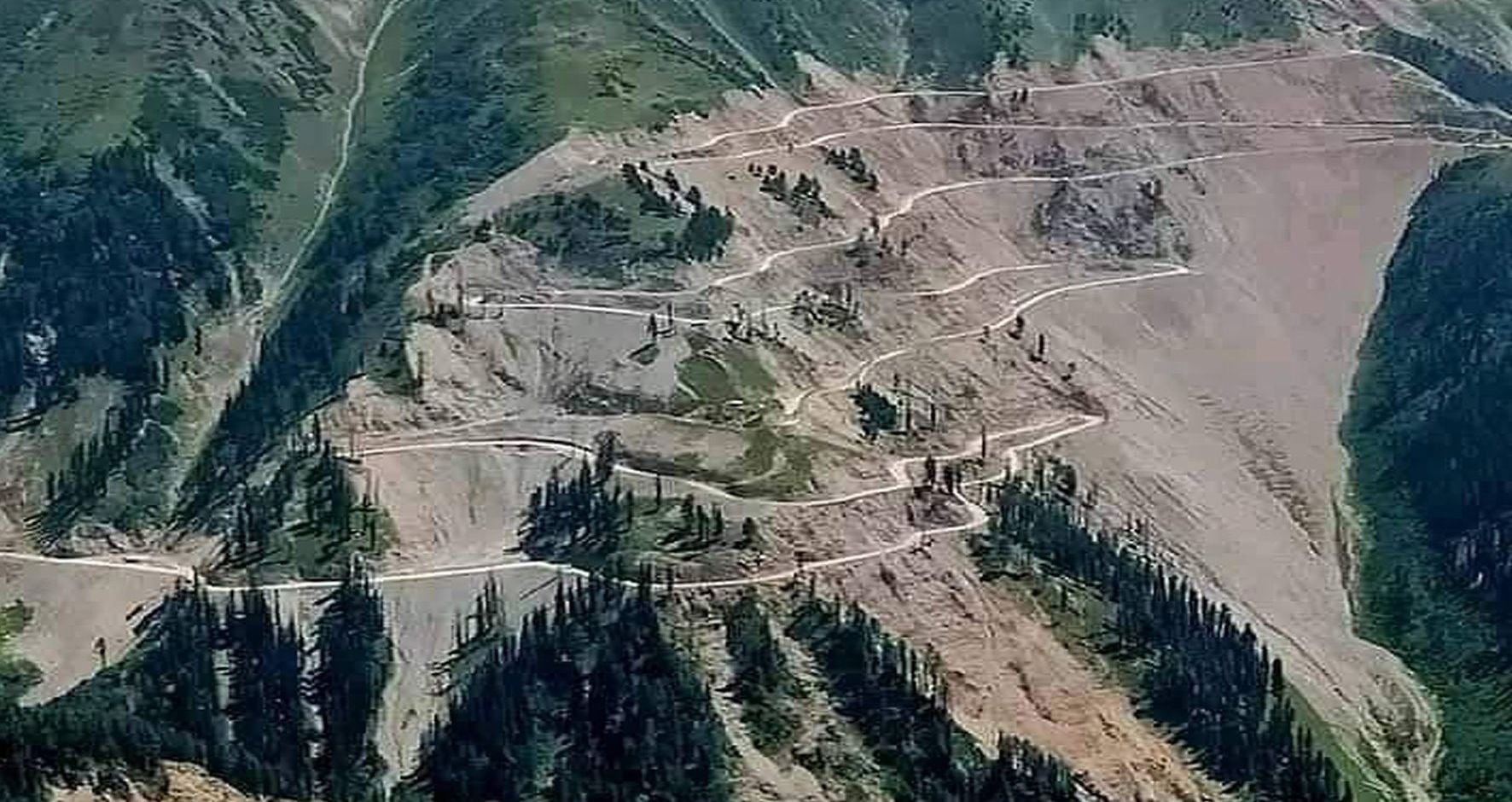
"The absences of three species underscores the severity of anthropogenic pressures and habitat loss in Poonch District." — Hussain et al. 2025
The team hopes their records will prompt local and regional governments to protect this little-studied part of the Pir Panjal, and that local people will keep reporting what they see. A WhatsApp group of neighbours who send in photos of snakes is citizen science at its most practical, and it helped put three species on the map.
The papers
- (2025) First record of Trimerodytes praemaxillaris (Angel, 1929) from Xaisomboun Province, Laos, with additional comments on morphology, natural history, and the type locality Herpetology Notes 18: 143–153
- (2025) Boiga multifasciata (Blyth, 1861), Pseudoindotyphlops porrectus (Stoliczka, 1871), and Sibynophis collaris (Gray, 1853): three new snake records for Poonch District, Union Territory of Jammu and Kashmir, India Herpetology Notes 18: 187–195